Ask what you should do for your health and the generic answers come easily: eat vegetables, exercise, sleep well. Yet two people eating the same meals gain weight differently, and two people doing the same workout recover differently. Whether the generic advice applies to you is something you can only judge once you know your own body.
Our personal testing combines four tests — genetic, blood, SNP and urine — to build a multi-angle picture of where you stand right now. From an analysis of your habits and diet, it tells you whether you need to add nutrients or whether something like a supervised fast — a subtraction — is what your body is asking for, and turns that into a proposal designed for you alone. This article explains what each of the four tests shows and how they come together into one plan.
Key takeaways
- The four tests play different roles: genes show constitution, SNPs show individual metabolism, blood shows the present, urine shows day-to-day variation
- Results are used not only to add what is missing but to decide what to reduce
- The proposal covers diet, sleep, exercise and, where appropriate, treatment, in a form you can keep up at home
- Testing is not diagnosis; findings that may need treatment are referred to a physician
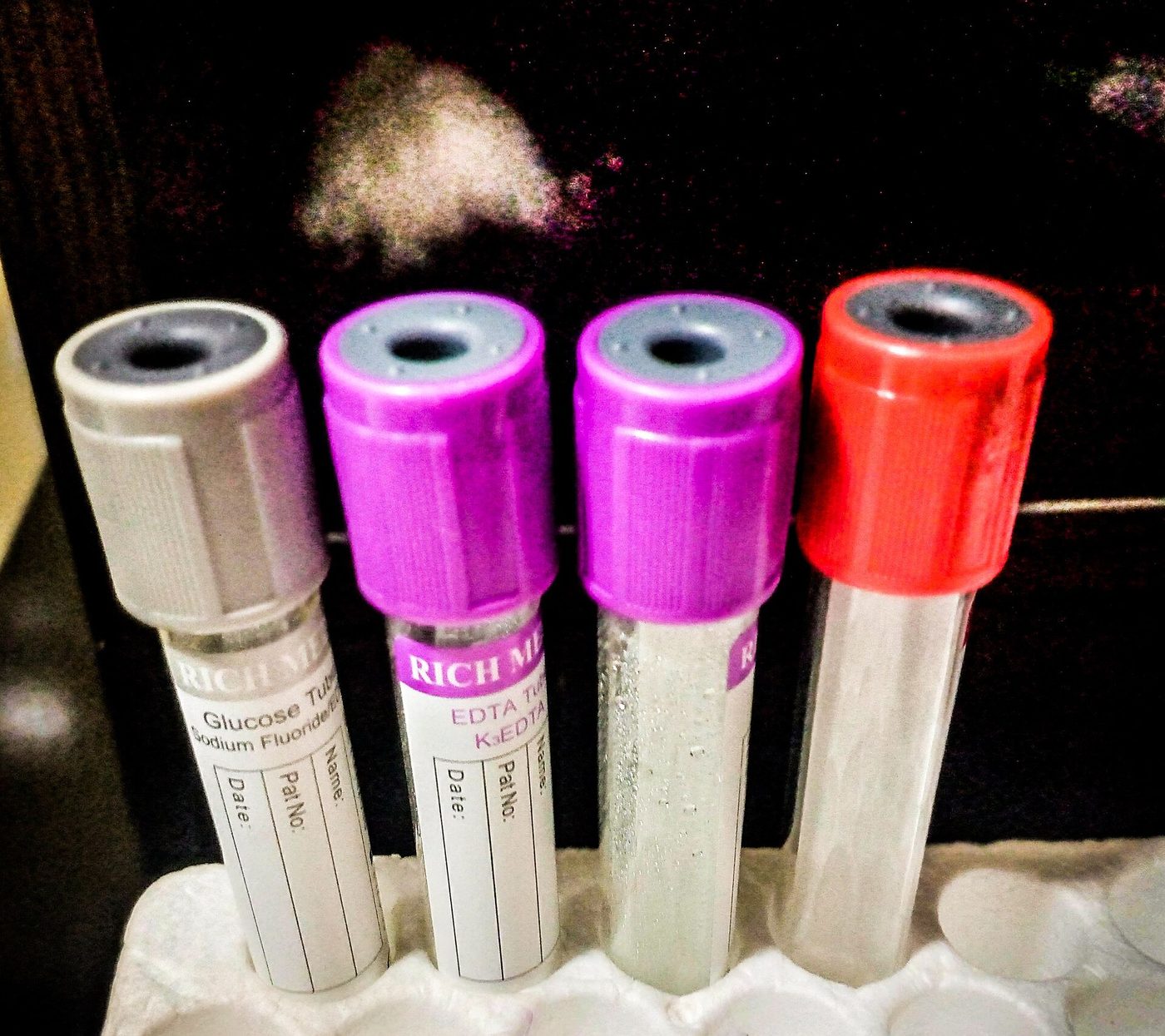
Frankincense Diala / CC0 — Wikimedia Commons
Part 1: What each of the four tests does
1. Genetic test: the constitution you were born with
A blueprint that never changes. Ancestry, physical traits, variants linked to disease risk, nutrient metabolism and likely responses to medication — the background to "why am I like this?"
2. SNP test: individual differences in metabolism
A test focused on single-nucleotide polymorphisms, the tiny variations in genes that explain why people respond differently to the same nutrients and foods: a weak version of the enzyme that activates folate, slow caffeine clearance, low activity in a lipid-metabolising enzyme. Much of "we ate the same thing but reacted differently" lives here.
3. Blood test: where you are now
Blood cells, liver, kidney, lipids, glucose metabolism, inflammation, hormones and nutrients, in numbers. If genes are tendency, blood is what is actually happening today.
4. Urine test: day-to-day variation
Kidney function, glucose and protein in urine and metabolic by-products reflect the effects of recent food, hydration and stress. Urine responds to shorter-term change than blood, which makes it well suited to tracking how lifestyle adjustments are working.
Part 2: Overlaying the four turns results into a proposal
Looking at each test separately does not lead to action. We overlay the four to answer three questions in the report.
1. What is missing
Nutrients you are genetically prone to lack and that the blood test confirms are actually low, in order of priority. Someone with vitamin D–related SNPs and low blood vitamin D, for example, gets a concrete plan for food and supplementation.
2. What is in excess
When lipid or glucose values run high and urine shows raised sugar or metabolic by-products, the proposal is about subtraction rather than addition: changing what you eat, when you eat, and, where appropriate and under medical supervision, a period of fasting. Fasting suits no one universally; it is proposed only after blood tests and examination confirm it can be done safely.
3. Which habits to change
Sleep, exercise, stress and meal timing — the habits behind the numbers, reviewed together with you. A slow caffeine metaboliser who drinks coffee in the afternoon and cannot sleep is a cause-and-effect link we find often.

Lablascovegmenu / CC BY 2.0 — Wikimedia Commons
Part 3: Example proposals
Case 1: a man in his forties with chronic fatigue
Low iron and vitamin D on the blood test, a slow caffeine metaboliser on the SNP test, signs of dehydration in urine. Proposal: replace iron and vitamin D, no caffeine after 2 pm, a daily fluid target. The physician considered secretome IV therapy and judged it suitable.
Case 2: a woman in her thirties who struggles to lose weight
A genetic tendency in carbohydrate metabolism, slightly raised insulin. Proposal: change the order and timing of meals rather than cutting carbohydrates, morning walks, and a short trial of time-restricted eating at the physician's discretion. Nothing needed adding; rebalancing came first.
Case 3: a woman in her twenties with ongoing skin problems
Low zinc and a slightly raised inflammation marker, with a skin-barrier tendency on the SNP test. Proposal: zinc-rich foods, a different cleanser, protected sleep hours. The physician proposed care for immune-related symptoms, which she chose to receive.
All three are real cases altered to prevent identification; the same proposal does not suit everyone.
Part 4: From testing to proposal
1. Pre-consultation (online, free)
Goals, history, medications, symptoms and habits, and which tests to combine.
2. Test day (partner clinic, Barcelona)
Blood, urine and saliva, about 30 minutes, with an interpreter. Blood is drawn fasting, so the first appointment of the morning is best.
3. Results and report
Blood and urine in a few days; genetic and SNP results in one to seven days. A PDF report in Japanese and English, explained by your coordinator.
4. Proposal and action
Four pillars — diet, sleep, exercise and treatment where appropriate — with anything that can start during your stay started on the spot. Nutrition counselling goes down to sample menus for home.
5. Follow-up after you return
Three months of email and video follow-up. Home urine kits and repeat tests on a return visit let you compare change over time.
Part 5: Before you test
- You do not need all four tests; we propose a combination based on your goals. Indicative prices: personal testing (blood, SNPs, urine) €2,000; same-day genetic test €600; both excluding VAT
- Testing is not diagnosis. Findings that may need treatment are referred to a physician
- Genetic data is sensitive and handled under GDPR; it is never shared with third parties without your consent
- Fasting and dietary restriction may be unsuitable if you have an existing condition or are pregnant or breastfeeding; they are undertaken only at a physician's judgement
Summary
Knowing your own body is the first step to thinking about health. Genes for constitution, SNPs for metabolic differences, blood for the present and urine for daily variation — only when the four are overlaid does a proposal that genuinely fits you become possible. Deciding what to add and what to subtract, and shaping it into something you can keep doing at home, is the purpose of our personal testing.
Talk to us about testing and treatment in Europe
From testing and stem cell secretome therapy at partner clinics in Barcelona to arranging your stay, we coordinate everything in English and Japanese. The online pre-consultation is free.
Request a Free Pre-Consultation